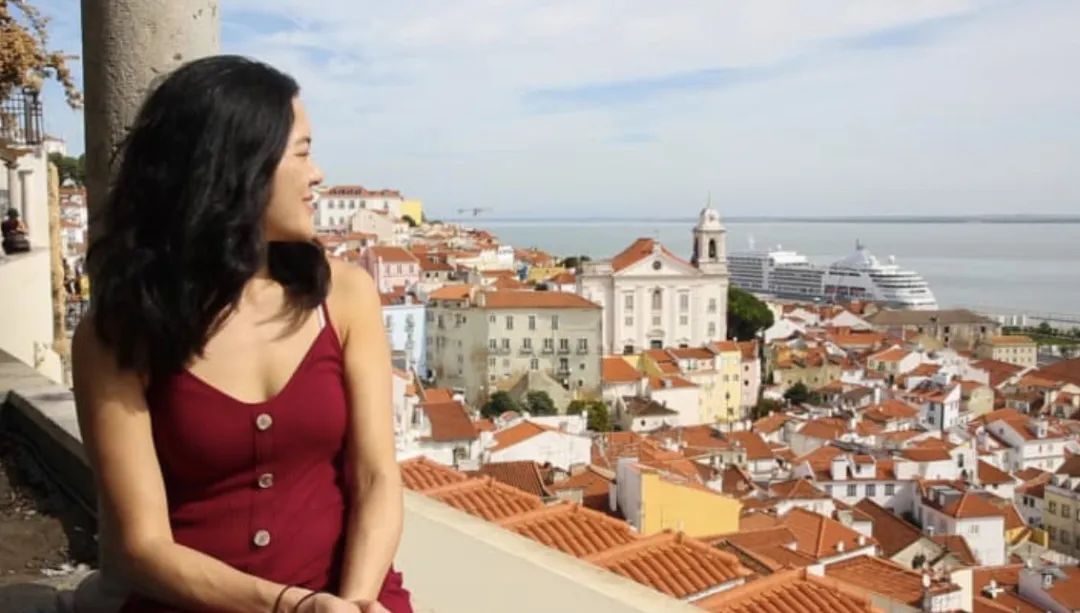
Alexandra Ryan-Yavaca wanted to settle in her childhood hometown of San Diego, California, to live and work with her husband, Utku.
But soaring housing costs prevented the 34-year-old from living there on a middle-class salary like her parents—a teacher and a public relations professional—once did. Her parents bought her childhood home for $300,000 in 1996; it is now worth over $1.2 million.
In the summer of 2021, the Yava??as moved to Lisbon, Portugal. An affordable cost of living and a laid-back culture were their main reasons for relocating.
"Leaving the U.S. felt liberating," Alexandra said. "Where in America can you be in a downtown area, looking at the ocean, eating fresh seafood, and working as a freelance entrepreneur all at the same time, like you can here?"
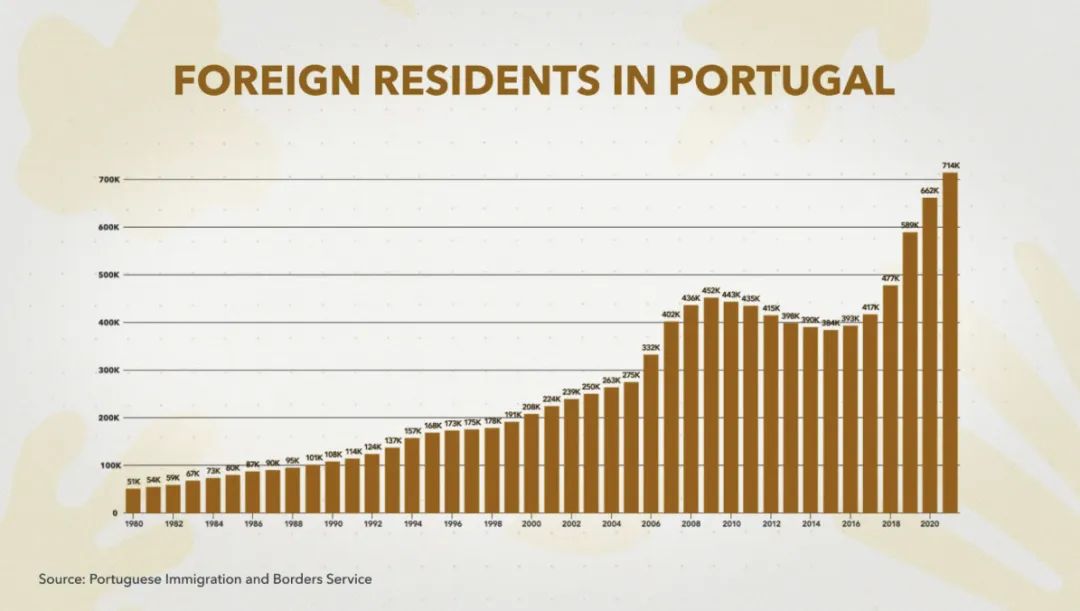
The Yavaas are part of a wave of immigrants and digital nomads settling in Portugal in search of a better life. According to Portugal's Immigration and Border Service, the number of foreign citizens living in the country has exceeded 714,000, a record high, accounting for about 7% of the total population in 2021.
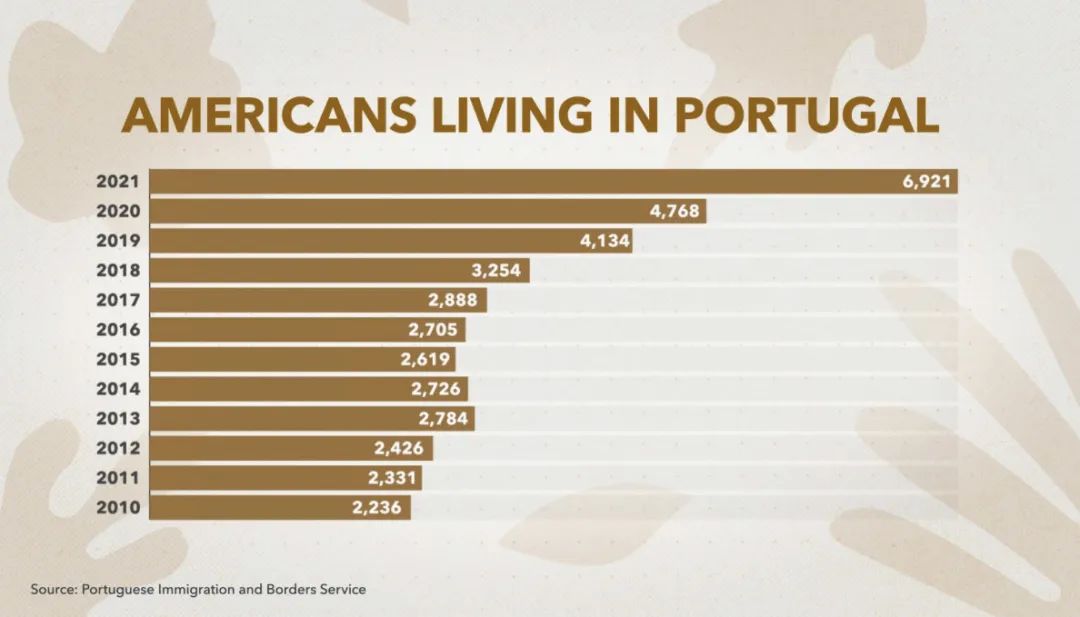
According to the agency, the number of Americans living in Portugal is at its highest level in more than a decade. By the end of 2021, approximately 7,000 Americans were living in the country, more than double the number from three years earlier. Among foreign residents in Portugal, the U.S. ranks as the 24th most represented country.
As the pandemic and remote work have transformed how we live and work, people are relocating and changing careers based on what best meets their needs.
"Before, Portugal seemed like a retirement destination. Now, it seems like a cool place to start over," said Mateusz Zurek, 35, who moved from Poland to Lisbon in early 2021 to start a restaurant with his American business partner, Jamalie Grant, 28.
I spoke with dozens of Americans who moved to Portugal in recent years, many of whom see the move as a new adventure and a lifestyle change. Many expressed enthusiasm and hope about their new lives in Portugal, feeling that they could finally live the kind of life they wanted—one that seemed unattainable in their hometowns back in the U.S.
What is it about this small European country, with a population similar to that of Georgia, that holds such appeal for so many Americans? At the end of 2021, I traveled to Portugal for the first time to find out.
Portugal has a lower cost of living than many Western countries.
Many foreigners say what attracts them to Portugal is its low cost of living and high quality of life. According to World Bank data from 2020, if a basket of goods and services costs $1 in the United States, it costs 57 cents in Portugal.
"A lot of the services you buy are labor costs. Wages in Portugal are lower. So most things that are labor-intensive end up being cheaper," said Ricardo Reis, a Portuguese economist and professor of economics at the London School of Economics.
As an American tourist from Los Angeles, California, daily life in Portugal felt remarkably affordable. One night, I enjoyed a three-course meal in the coastal town of Carvoeiro for about $17—including soup and salad, fresh fish, ice cream, and sangria. A three-hour boat ride along the Algarve coast cost $30. A late-night Uber ride across Lisbon at nearly 1 a.m. on a Friday set me back about $19. In contrast, every time I need a late-night Uber in Los Angeles or New York City (where I used to live), I cry a little inside—it usually costs $50 to $70.
I met several Americans whose standard of living improved significantly after settling in Portugal.
Samantha Hayden said she had always lived in "closet-sized spaces" in Singapore and New York City. After moving to Lisbon in the summer of 2021, the 32-year-old consultant now rents a three-story house outside the city center, complete with two offices, a dining room, and a garage.
Shar Wynter spent three months in Lisbon in 2020 before officially relocating from Atlanta, Georgia, in the summer of 2021. Now 37, she spends between $2,100 and $2,500 per month on living expenses, compared to $4,000 to $5,000 per month in Atlanta. She pays $1,250 a month for a renovated one-bedroom, two-bathroom apartment in the city center, complete with a balcony and plenty of natural sunlight. For comparison, Wynter used to pay $1,800 a month for a studio apartment in Atlanta.
Foreign residents are also eligible for the country's free national healthcare system.
"I came here to be healed."

Portugal is often called "the California of Europe." Unless you get California's temperatures and beaches without California's prices. I visited in October and enjoyed 10 straight days of sunny 80-degree weather.
There's natural beauty, as well as a cultural life. Expats told me they haven't struggled to assimilate. Most Portuguese people speak English since they learn it in school from a young age, and they're generally welcoming to foreigners.
Portugal is also safe. The country ranks fourth in the world in the Global Peace Index, which assesses aspects such as crime rates, violent demonstrations, political stability, and involvement in domestic and international conflicts. The United States ranks 122nd.
Racial violence in the U.S. prompted Wynter and her friends to move to Portugal. "Black Americans often find they are treated well here, without the kind of deadly racism you see in America," Wynter said.
Diara Parker, a 32-year-old stock consultant who moved to Lisbon from Madison, Wisconsin, in early 2021, said: "Honestly, I came here to get a lot of healing. Healing from past traumas, healing from everything that makes America America—putting us in these very rigid boxes in many ways. For me, being a Black woman didn't really give me room to grow into my full, authentic self."
I also spoke with several expats who were recovering from burnout, and they told me they finally felt able to find personal fulfillment outside of work.
"I used to almost be afraid to take time off. But here, my office actually closes in August," Hayden said. "In many big cities in America especially, there's a real focus on the grind and on achieving success and climbing the ladder. I think here, life is more balanced. Family is important to me. Spending time with friends is important to me, too."
As a freelancer living in Lisbon, Ryan-Yava??a said she doesn't have to work eight hours a day to get by. That allows her to prioritize her family and well-being.
"We sometimes alternate working and taking care of our child. And we don't have to check in with anyone," she said. "Coming from the U.S., that's impossible. I couldn't just take a few days off and say I'm turning off my computer for the next four days to go on a meditation retreat."
Parker said she has finally learned to enjoy all the simple moments in life. "I never thought I would enjoy hanging my clothes out to dry... then taking them down and smelling the fresh air. Being able to focus on myself and thrive as a whole human being beyond just being a worker bee has been life-changing, really."
"I Wouldn't Have Started This Business in the U.S."
Despite the laid-back culture, many young people are not moving to Portugal to slack off. It's a place where many expats feel empowered to take risks and start new ventures.
When you can afford a comfortable life without working around the clock, "I think because you have time, it becomes much easier to have the space to pursue your creative entrepreneurial aspirations and ambitions," Wynter said. In December 2021, she launched Xpat, a mobile app connecting expats around the world.
During the pandemic, Margo Gabriel was laid off from her job in academia. Then, the 35-year-old moved from Boston, Massachusetts, to Lisbon in 2020, where she could finally "continue many of the creative projects I had put on hold for years," she said. Gabriel now works as a full-time freelance writer and travel writer, with most of her clients based in the U.S.
In 2021, the Yava??as launched Sebze Lisboa, an Anatolian and vegetarian kitchen that caters events, fulfills takeout orders, and hosts pop-up dinners. "I wouldn't have started this business in the U.S., because first of all, there are food regulations, business licenses, high startup costs," Alexandra said. "You have to go through so much bureaucracy and red tape. I can't even imagine that in two weeks, we could have a startup."
By contrast, "starting a business in Portugal is easy," said economics professor Reis. "You can start a business in an hour with relatively limited paperwork."
Portugal has become known for its startups, which are primarily concentrated in Lisbon. According to the 2021 Portugal Startup Outlook, investment in tech startups based in the country grew to over €180 million in 2021, compared with total investment of around €1.2 million in 2016, five years earlier.
According to the report, one in three founders who started a startup in Portugal between 2015 and 2020 was not Portuguese.
Relatively Easy Access to the Golden Visa
An increasingly popular option is the golden visa, for those who invest between €350,000 and €1.5 million in real estate, investment funds, charitable donations, or other qualifying options.
After holding the residence visa for five years, you can apply for permanent residency and then citizenship. Kuffel said that the relative ease of obtaining a Portuguese visa makes it one of the most popular choices for foreigners seeking a European passport.
"They want a Plan B... for political reasons, or for safety reasons."
Portugal encourages immigration by granting foreigners tax breaks under what is known as the Non-Habitual Resident (NHR) tax regime. New foreign residents can receive tax exemptions on any taxable income earned from abroad. This means that if I moved there, for the next 10 years I would not pay Portuguese tax on income I earned from the U.S., as long as I was taxed in the U.S.
These incentives seem to be working. But few of the people I spoke with mentioned taxes as the reason for their move. Their motivation was the pursuit of a better life.
Growing up, I often heard about people moving to the United States to chase the American Dream. But now it seems many Americans are chasing that dream elsewhere—like in Portugal.
The Portuguese Dream for Americans

Growing up, I often heard about people moving to the United States to chase the American Dream. But now it seems many Americans are chasing that dream elsewhere—like in Portugal.